Strata reserve funds and special levies: what a BC condo buyer should check
Two condos can list at the same price with very different futures. One has a healthy contingency reserve fund and a plan for its roof. The other has kept strata fees low for years and will pay for its next big repair with a special levy. The listing photos won't tell you which is which. The strata documents will.
This guide models a hypothetical 60-unit building over 30 years under two reserve plans, shows how a levy is split between owners, and lists what to read before you remove subjects.

The contingency reserve fund
A strata corporation saves for major repairs in its contingency reserve fund (CRF). BC rules set a minimum contribution, which rose to 10% of the operating budget in 2024, and most stratas with five or more lots must commission a depreciation report every five years. The report estimates when each component wears out and what it will cost.
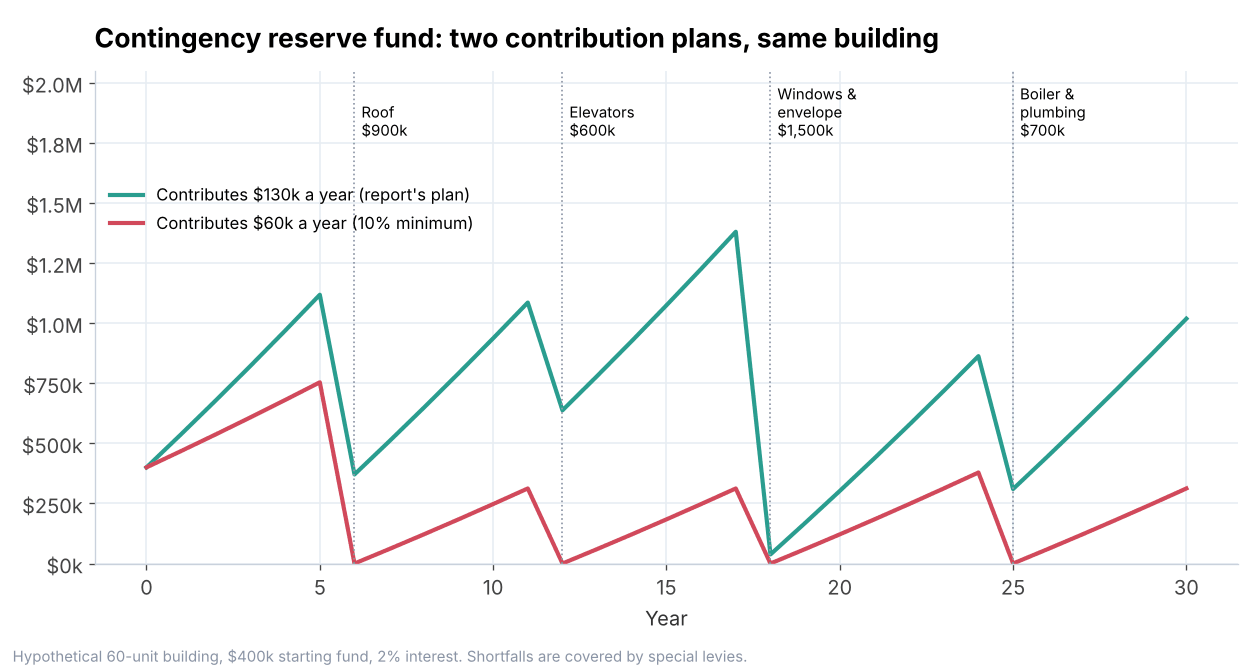
| Plan | Yearly contribution | Special levies over 30 years | Fund left in year 30 |
|---|---|---|---|
| Minimum | $60,000 | about $1.67 million | about $310,000 |
| Report's plan | $130,000 | none | about $1.02 million |
How a levy is split
A special levy is shared by unit entitlement, which in most residential buildings follows floor area.
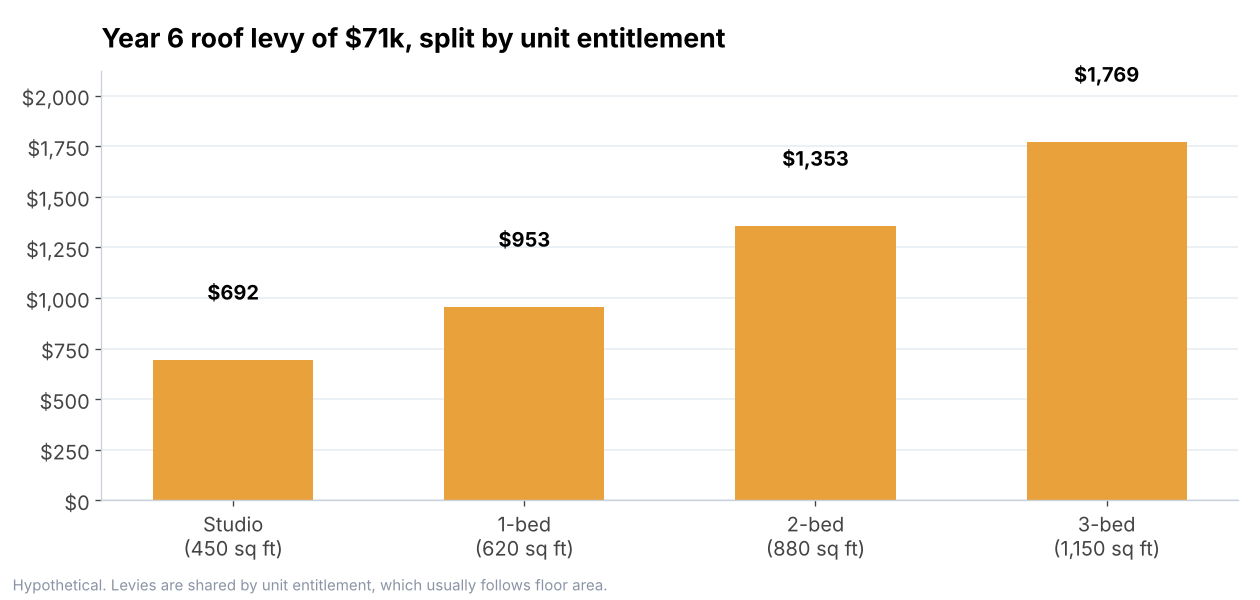
The year 18 window and envelope project is the dangerous one: about $1.12 million of shortfall, or roughly $18,700 for an average unit, due in a single year.
What owners actually pay
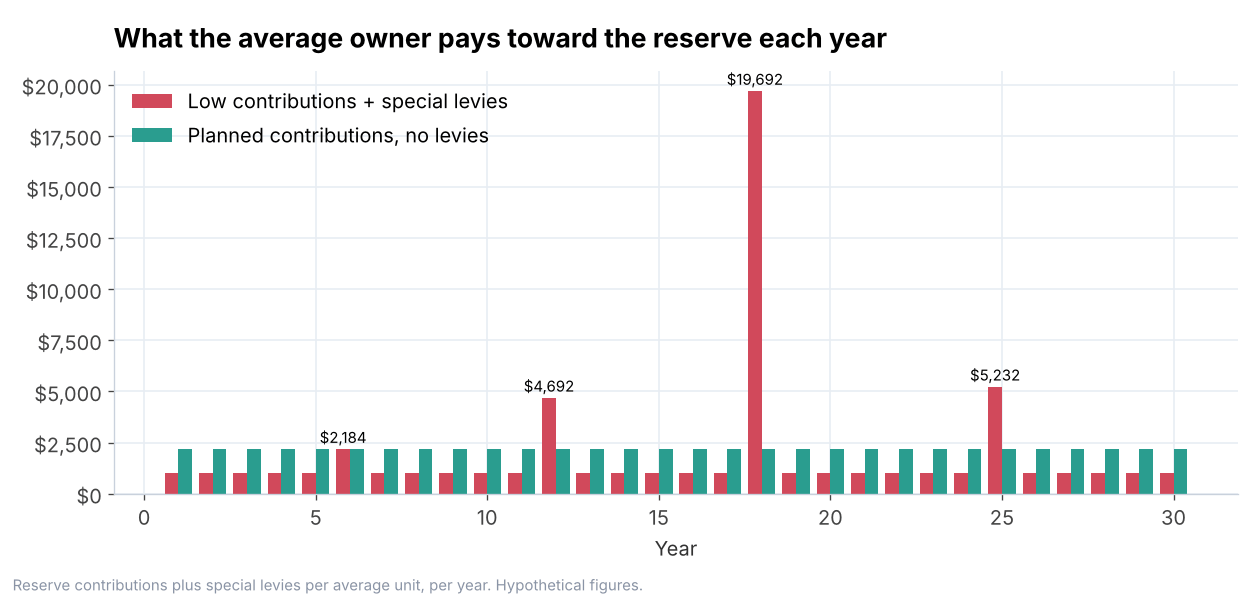
Low fees aren't free money. Over 30 years the average owner pays about $57,800 under the low plan and $65,000 under the planned one. But the planned building still has about $17,000 per unit in the bank at the end, and no owner has to find $19,700 in one year.
What to read before you remove subjects
- Form B information certificate: the CRF balance, any approved or proposed special levies, and the monthly fee.
- Depreciation report: compare the recommended contributions with what the strata actually collects.
- Two years of minutes: look for words like "envelope", "leak", "levy", "engineer", and "insurance deductible".
- Insurance certificate: the deductible for water damage, which owners may be charged.
To compare fees and recent sold prices for townhouses and condos across Metro Vancouver, see EstateBlock's Vancouver townhouse prices analysis.
Sources and further reading
- Government of British Columbia: Strata housing: depreciation reports and contingency reserve funds
- Condominium Home Owners Association of BC: Strata resources
Hypothetical building and figures. General information only, not legal advice.